Showing posts with label boxelder. Show all posts

Sunday, December 9, 2018

“Trees know when history begins”

Late afternoon. These days no direct light reaches the boxelder in the nook; the sun sets too far south.

Years ago—long before I moved to the West Side—heavy-equipment operators, concrete masons, carpenters, and laborers of all sorts constructed a large building between my house and the river. They cleared and leveled the site, poured slabs, framed structures, attached sheathing and roof, and installed doors. But the ground at the base was left bare. That’s how history begins.

Today another history: a tall inside corner, a nook unkempt and likely unnoticed, a boxelder standing in the perfect right angle above thistles, tumbleweeds and trash. Trees know when history begins, always sprouting up fresh

Shoots sucker along concrete, leaves spread green across corrugated metal, a tree now just taller than the door will reach beyond the roof.
This boxelder is adventive, well-established on a site that was barren not that long ago (1). It’s not so much of a stretch to link it to Advent, which started just last week on the fourth Sunday before Christmas. Adventive and advent both come from Latin advenire, to arrive. But here the similarity ends. Though the nook appears harsh and unforgiving, living there is hardly a form of penance. That boxelder seed landed in a sanctuary—shade, runoff, no competition. Whatever we leave empty will be filled.

I came across “Up a Gulch” in one of King’s chapbooks, In the Empty Mountains. I was only a few lines into the poem when it dawned on me—this is about the boxelder I’m following! Thanks to Lithic Press for permission to include it here (2).

Bob King was well known and appreciated by Colorado poets. He started the Colorado Poets Center, a richly annotated directory of published poets living in or with strong ties to the state. His own works include seven chapbooks, two full volumes of poetry, essays, articles, short fiction, creative non-fiction and more. King passed away in April 2017, shortly after In the Empty Mountains was published. For more about him, see this tribute.

Notes

(1) Botanists disagree on the definition of adventive. Some say only non-native species qualify as adventive. Others use the term for native or non-native species that are new to a site and do no harm. I use it similarly, but without the do-no-harm criterion (too hard to judge!).

(2) Robert King’s In the Empty Mountains is available from Lithic Press, an independent small press in Fruita, Colorado:
“… these poems reveal the joys, pains, and insights of a man long on the wisdom road. He sees daily occurrences from a very broad perspective, that leads to humility that cannot hide.”
[The description in the Lithic catalogue features “Up a Gulch” as a selected excerpt!]


Sunday, November 11, 2018

My boxelder finally accepts the inevitable …

Standard approach photo—boxelder on left, in nook formed by warehouse walls.
National Weather Service Observed Weather for Laramie, Wyoming; November 10, 2018, 9:53 AM (MDT):  partly cloudy; 36º F; humidity 31%; winds westerly, 28 mph with gusts to 38 mph.

Conditions were not ideal for plant photography, but I had no choice. There would be no other opportunities to visit the boxelder I’m following if I wanted to post my report before the deadline. So off we went.

Even from a distance, the change was obvious. A month ago, the boxelder still was covered in green leaves, even though most other trees had turned color or were bare. Now the boxelder is bare too, except for a few memories.
Leaf still hanging on (boxelder leaves are compound).
Amazingly persistent spring flowers; note anthers at ends of dangling filaments (male tree).
I saw many more remnant petioles (visible below), which I mentioned last month. I had no idea that boxelders drop leaf blades but not petioles, or at least not yet. Do maples do this? (both boxelder and maples are in the genus Acer) Any other plants, do you know?
Abundant buds promise that spring will come. Though I never really doubt that it will, I still find comfort in buds.
Flower and leaf buds.
A tumbleweed had lodged in branches near the base of the tree (straw-colored, mid-photo below). This was no surprise. The field across the river to the west, part of the Territorial Prison tourist attraction, was cleared of vegetation a few years ago, I have no idea why. Now it’s perfect habitat for tumbleweeds, and every year around this time, they cut loose and head into town, dropping seeds as they go. This one is kochia (Kochia scoparia), the most common of our tumbleweeds.
The Canada thistles along the base of the warehouse wall were still green but seriously wilted. I think they're done for. This is Cirsium arvense, one of the most noxious of our noxious weeds.

Next I checked on the little lilac bush that I discovered last month in the field just west of the warehouse. When the surrounding railroad ties, palettes and debris were removed recently, the cleanup crew left it standing—so nice, and I smile whenever I see it. Now it too is bare of leaves. But there are plenty of promising buds.
A small building used to stand in this field; perhaps that explains the lilac bush. I looked through my photos, and found one from April 2014 with the building. Sure enough, it stood in the area of the little lilac. Whitman’s lilac came to mind—the one that last in a dooryard bloomed—but I think their circumstances differ. This lilac has survived in the absence of a dooryard, and hopefully there's more blooming ahead!

Sunday, October 7, 2018

Boxelder News & Other Exciting Changes

It’s time for the monthly report about my boxelder by the warehouse, so let’s take an early morning walk to see what’s up. Heading west on the dirt road to the Laramie River, we immediately see changes since last month’s report. The old railroad ties piled up near the end of the warehouse are now gone. The Wyoming Department of Transportation has covered the new road adjacent to the dirt road with ground-up asphalt, salvaged from the old bridge across the railroad tracks (recently torn down). More relevant to the topic at hand—tree-following—cottonwoods bordering Murdoch's distribution center the north, and along the river to the west, are now yellow-orange or have lost their leaves entirely.
But around the corner ...
… we can see even from a distance that the boxelder is still green. That nook must afford a fair amount of protection.
Not totally green however.
Leaves close to the walls appear to be the richest green, while others are in various stages of turning yellow. Maybe not obvious at first, a lot leaves have fallen leaving barren petioles (leaf stems).
Two leaves (boxelder leaves are compound).
Lower right—petioles with no leaves.
Geeking-out on botanical terminology.
Nearby, the usual trailer is parked in its usual place. A close-up shows where this boxelder grows in the greater scheme of things.
Our home.

Next, let’s head west across the field toward the river … but wait!
Sirens wail and lights flash on the Snowy Range Road. A firetruck shows up. Then the sirens stop. But the flashing lights continue, for longer than we care to watch.

In the field between the warehouse and the river, we see more cleanup. More piles of old ties have been removed, along with miscellaneous discards and debris. Now there's a huge patch of bare dirt decorated with frosted bulldozer tracks. And right in the middle …
 … we spot a small shrub.
It's a ragged little lilic bush that the earth-movers, debris-loaders and garbage-haulers left standing, somehow avoiding it with their huge machines!
I smiled and walked home in a sunny mood, happy to be a tree-follower.

For more tree-following news, check out the latest virtual gathering, kindly hosted by The Squirrelbasket. And for you tree-aficionados: New members are always welcome!


Tuesday, September 11, 2018

My Tree Hedges its Bets

Though our weather continues to be abnormally mild, most deciduous trees show signs of the approaching autumn, with various degrees of color change in their leaves. But the boxelder I’m following seems to be of two minds as to whether to the growing season is ending (1). Should it stop making green chlorophyll, revealing previously hidden red and yellow pigments? Should it quit nourishing its leaves altogether, ensuring senescence, abscission and loss? Or should it just keep on growing?
Plains Cottonwood in my yard. Leaves are a bit sparse this year due to our hot dry summer.
Young cottonwoods along road to Laramie River.
Yesterday evening, after the workday was over and everyone had gone home, I walked to the west side of the warehouse to find out what the boxelder was up to. As you can see in the photo above, changes are underway—a strip of grassland next to the dirt road has been removed. When I discovered this last week, I was worried; I walk this way to the Laramie River almost everyday. Then one morning I chatted with the bulldozer operator and got some good news. The dirt road we’ve used all these years is on private property, but the Wyoming Department of Transportation secured a right-of-way and is making a new public dirt road to the river (2). WYDOT rocks!!

As usual, I caught my first view of the boxelder after rounding the corner of the warehouse. Though it was still mostly green, I could see, even at a distance, that a few branches had changed. Up close, these were beautiful arrangements of green and red leaves glowing in the golden evening light.
Stacks of pallets are new additions since last month.
But as was obvious from a distance, most of the leaves were still summery green. In fact I saw several branchlets with young leaves. Apparently the boxelder is hedging its bets—maybe not too surprising for a pioneering adaptable “weedy” species.

Once again tree-followers are meeting for a monthly virtual gathering, reporting the latest news for the trees we are following this year. If you want to give it a try, come join us! See the blog of our gracious host, The Squirrelbasket, for more information.

Notes

(1) UK readers: Several dictionaries informed me that you would find our (USA) phrase "of two minds" strange, preferring "in two minds" ... correct? 

(2) This right-of-way and dirt road are part of the new road/bridge project that I mentioned in several tree-following posts. The project is almost done. Road, bridge and bikepath are fully functional; just a few minor things need finishing.


Monday, August 13, 2018

Boxelder—the Odd Maple


The boxelder I’m following this year, the one that grows in a nook formed by warehouse walls, has changed only subtly since last month’s report. It has more leaves—not that I’ve counted them or measured their cover, but I can see new ones emerging, even though the first signs of summer’s end have appeared. Must be an optimistic tree.
The sand dock along the warehouse wall is done storing energy underground, and is now a brown tangle of dead leaves (Canada thistle sticking up through).
Boxelder’s oppositeness—stems as well as leaves.
Fresh new leaves … in September!
The miniature leaves emerging at the tips of the branchlets had interesting forms, surprising actually. But in the morning shade it was impossible to capture them in focus, so I took a branchlet home.
Interesting! These two young leaves look deeply incised and pinnately-lobed (keep this in mind for the trick question coming up soon).

Q: "How many leaves in the next photo?"
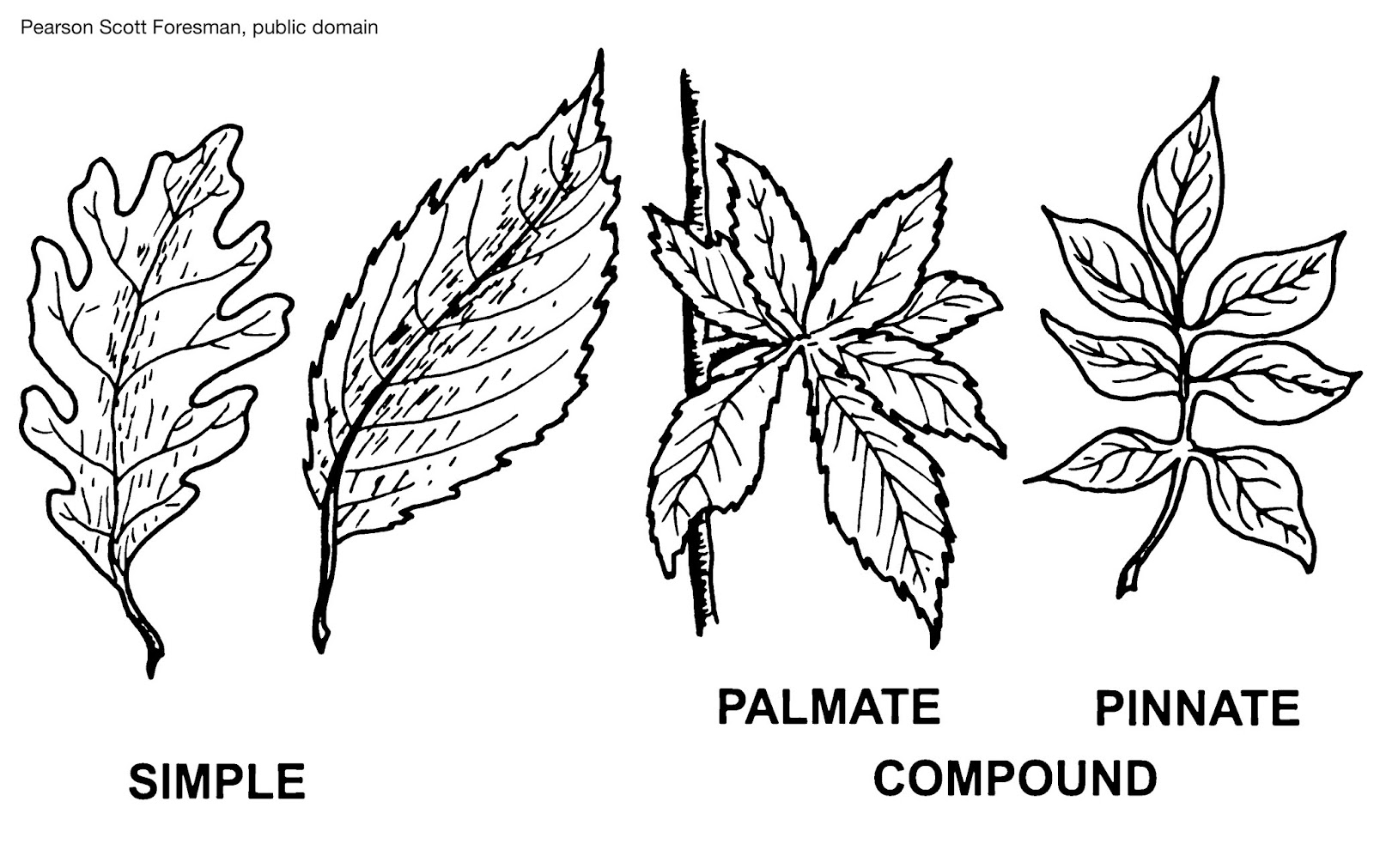
A: "Just one." This is a little trick we ranger naturalists would use on nature walks. Most people would answer five. Then we explained how actually this is a single leaf, i.e., from one bud, and that it split into leaflets as it grew. At least one former ranger I know took it a step further, overlapping the leaflets to show that the boxelder is indeed a maple, a member of the genus Acer.

Even so, doesn’t it seem a bit odd that boxelder ended up in the genus Acer—that a tree with compound leaves was thrown into a group of simple-leaved brethren (1), especially given the proclivity of taxonomists for splitting? If you agree that this is odd, you’re not alone. In fact, you’re in the company of some of the most esteemed pioneering North American botanists.

The boxelder is native to North America, but by the mid 1700s, it had become common in Europe as well:
“ … it is in great request for adorning pleasure grounds, on account of the rapidity of its growth, and the beauty of its foliage, whose bright green forms an agreeable contrast with the surrounding trees.” (Michaux & Hillhorn 1819)
So it's not surprising that Carl Linneaus included the boxelder in the first edition of his Species Plantarum (1753), in which he formally introduced our binomial system of nomenclature. He assigned the scientific name in use today: Acer negundo (the complete name has “L.” appended to it because Linneaus is the authority). Why did he place boxelder in the genus Acer? Probably because it has the same distinctive fruit as maples: two-winged two-seeded samaras that spin in the wind (aka wingnut, helicopter, whirlybird, whirligig and spinning jenny).
Acer negundo L. (Michaux & Hillhouse 1819); samaras (keys) lower left.
When Andre Michaux published the first North American sylva in 1810 (2), boxelder was Acer negundo, following Linneaus’s lead. And so it remained for some thirty years, during which time Thomas Nuttall published periodic updates, adding new species that he and others discovered.

But by the time of Nuttall’s 1849 edition, boxelder had moved up in status (see p 90). It was in its own genus, Negundo, the boxelders, which included two species and a rumored third. The common boxelder became Negundo aceroides. N. californicum was the California boxelder, discovered by David Douglas, a Scottish botanist and major contributor to the North American flora. “It is remarkable for the almost tomentose pubescence of its leaves” (densely fine hairy), most of which had just three leaflets. Even the samaras were pubescent. Nuttall also mentioned a possible third species, christened N. mexicanum by Swiss botanist Augustin Pyramus de Candolle (3), but declined to recognize it until more material was available for study.
California boxelder, Negundo californicum (Nuttall et al. 1865).
I had hoped to find out why the boxelders were segregated into their own genus. But I wasn't able to solve that mystery. The Plant List considers Negundo aceroides an unresolved name, attributable to either John Torrey or Conrad Moench. Some sources hold Nuttall accountable as well. In any case, Torrey and Asa Gray, two of our great botanical luminaries, included it and N. californicum in their North American flora, published 1838-1840 (pp 49-50).

But Negundo turned out to be a passing fancy. At some point, boxelders were lumped back in with the maples. However, the California and Mexican boxelders were not abandoned—they’re now varieties. In fact, seven varieties of Acer negundo are recognized; the distributions of all but var. mexicanum are shown here (source):

My boxelder is Acer negundo var. violaceum, because its branchlets are glabrous (no hair) with a glaucous bloom—hence the bluish-green stem in the photo below.

Notes

(1) Boxelder is not the only odd maple. The great majority have simple lobed leaves, but there are several with either compound or simple unlobed leaves (details here).

(2) A sylva is all the trees growing in a specific region; also “silva”.

(3) Negundo mexicanum may have been based on material collected by botanist Jean-Louis Berlandier, a student of DeCandolle, who joined a Mexican scientific expedition in the late 1820s at the recommendation of his mentor (source).

Sources

Biodiversity Heritage Library Flickr Album for The North American sylva v.2 (1865).

Constantino, G. 2018 (March 29). Exploring the First American Silva. Biodiversity Heritage Library Blog.

Michaux, FA, and Hillhouse, AL. 1819. The North American sylva, or A description of the forest trees of the United States, Canada and Nova Scotia; considered particularly with respect to their use in the Arts , and their introduction into Commerce [English translation]. Paris, printed by C. D’Hautel. Available online at Biodiversity Heritage Library.

Nuttall, T, Michaux, FA, and Smith, JJ. 1865. The North American sylva; or, A description of the forest trees of the United States, Canada and Nova Scotia. Considered particularly with respect to their use in the arts and their introduction into commerce, v. 2. Philadelphia, Rice, Rutter & co. Available online at Biodiversity Heritage Library.

For more news about trees from various parts of the world, visit the monthly tree-follower gathering kindly hosted by The Squirrelbasket. New members always welcome!